
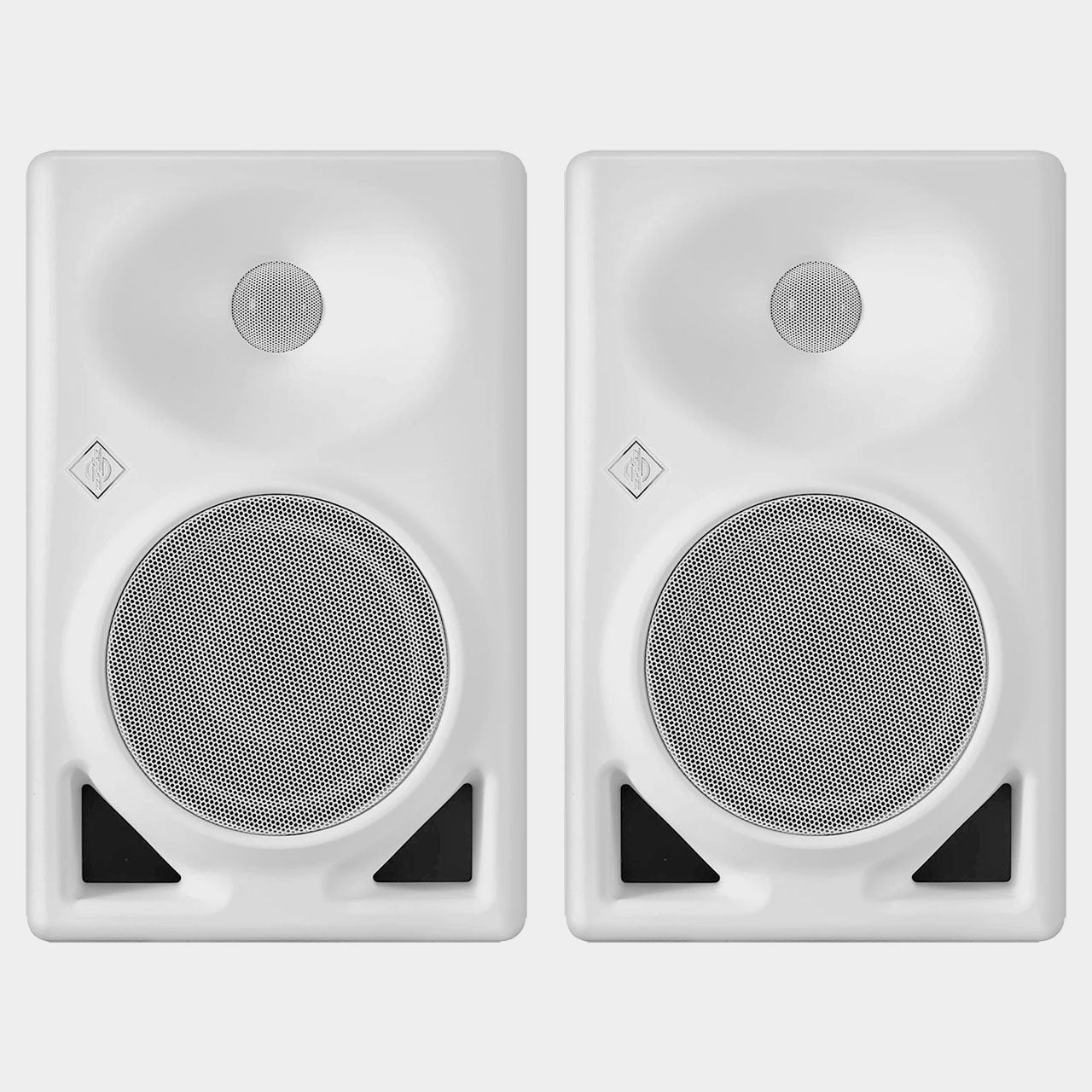


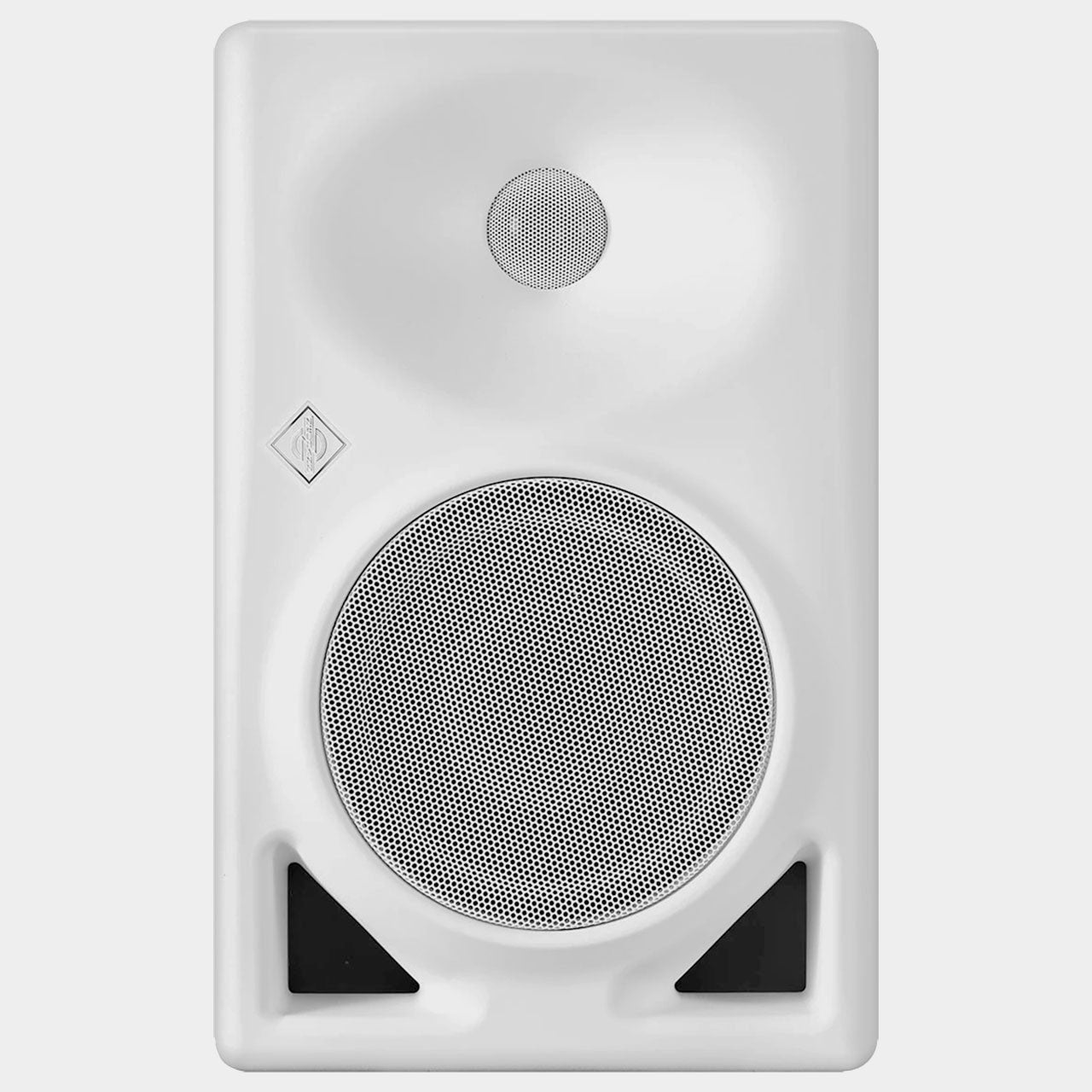


Neumann · KH 120 II AES67
Compact monitoring.
Confident decisions.
Put the centre of your mix into sharper focus. The Neumann KH 120 II combines a compact 5.25-inch design with DSP processing and useful bass extension, giving producers, engineers and editors a precise reference for the decisions they make all day.

The second-generation KH 120 is a substantial development of the original design. It brings deeper bass, greater output capability and internal DSP to a familiar nearfield format. For a studio where every centimetre matters, it offers a convincing balance of scale, detail and everyday practicality.
Hear the relationships inside the arrangement.
Good monitoring helps you make a choice and keep moving. Is the bass masking the body of the kick? Does the lead vocal need level, or a little less competition from the guitars? Is the ambience adding depth or simply pushing the performance away? The KH 120 II is built to make these relationships easier to follow without relying on an exaggerated tonal balance.
Its DSP crossover and phase correction support precise timing through the critical midrange and treble. Listen into the front edge of a snare, the release of a compressor or the tail of a room recording. The aim is a stable reference that helps you distinguish the performance from the processing, so your adjustments respond to what is actually in the track.

Designed for the way you work
A serious reference for smaller studios.
A 5.25-inch woofer and 1-inch tweeter deliver a published response down to 44 Hz at ±3 dB. That extension makes the KH 120 II useful for judging the weight of bass instruments without stepping up to a much larger cabinet. Neumann recommends listening from 1–2 metres, placing it naturally in project studios, production rooms and close-range mixing positions.
The MMD waveguide controls dispersion around the listening area, helping maintain a coherent tonal picture as you work. Front-facing ports, protected drivers and a compact enclosure make installation straightforward. Take time to establish a symmetrical listening triangle and a sensible relationship with the desk and nearby walls: the best position is the one that gives you the most dependable reference.
Your room. Your reference.
Make the room part of the setup.
Internal DSP makes the KH 120 II compatible with Neumann MA 1 Automatic Monitor Alignment. The separately available MA 1 measurement microphone and Mac/PC software measure the system and create an alignment for your listening position. Rear-panel bass, low-mid and treble controls also provide a practical starting point when you are setting up manually.
Explore Neumann MA 1 · Measurement microphone sold separately.
Audio networking, without losing local connections.
This is the KH 120 II AES67, with two redundant Ethernet audio ports for AES67 network streams. It supports RAVENNA, ST 2110 and ST 2022-7 network redundancy, making it suitable for compatible broadcast, post-production and networked studio installations. Balanced XLR analogue input and coaxial S/PDIF input/output are also retained.
It can receive AES67 streams generated by compatible Dante systems when AES67 mode is correctly configured; it is not a native Dante endpoint. Plan the network format and routing accordingly. MA 1 alignment remains available, so network integration and acoustic setup can be considered together.
Placement and system planning
Keep the monitors upright with their acoustic axes aimed towards the listening position. Set both speakers to consistent sensitivity and use a suitable interface or controller for volume adjustment. A compatible subwoofer can extend the system for work that needs deeper low-frequency coverage. MA 1 alignment complements sensible placement and acoustic treatment; it does not remove the need to consider the room.
What this listing includes
2 × Neumann KH 120 II AES67 white active studio monitors, with mains cables and supplied documentation. This is a stereo pair, not a single speaker. MA 1, subwoofers, mounting accessories and audio cables are available separately. All performance specifications and cabinet dimensions below refer to one monitor.