


Elysia
Elysia Xfilter


Omni Capital Finance Calculator
Choose options
Omni Capital Finance Calculator
Omni Capital Finance Calculator
Product overview
Stereo tone shaping with precise control and a flexible top end
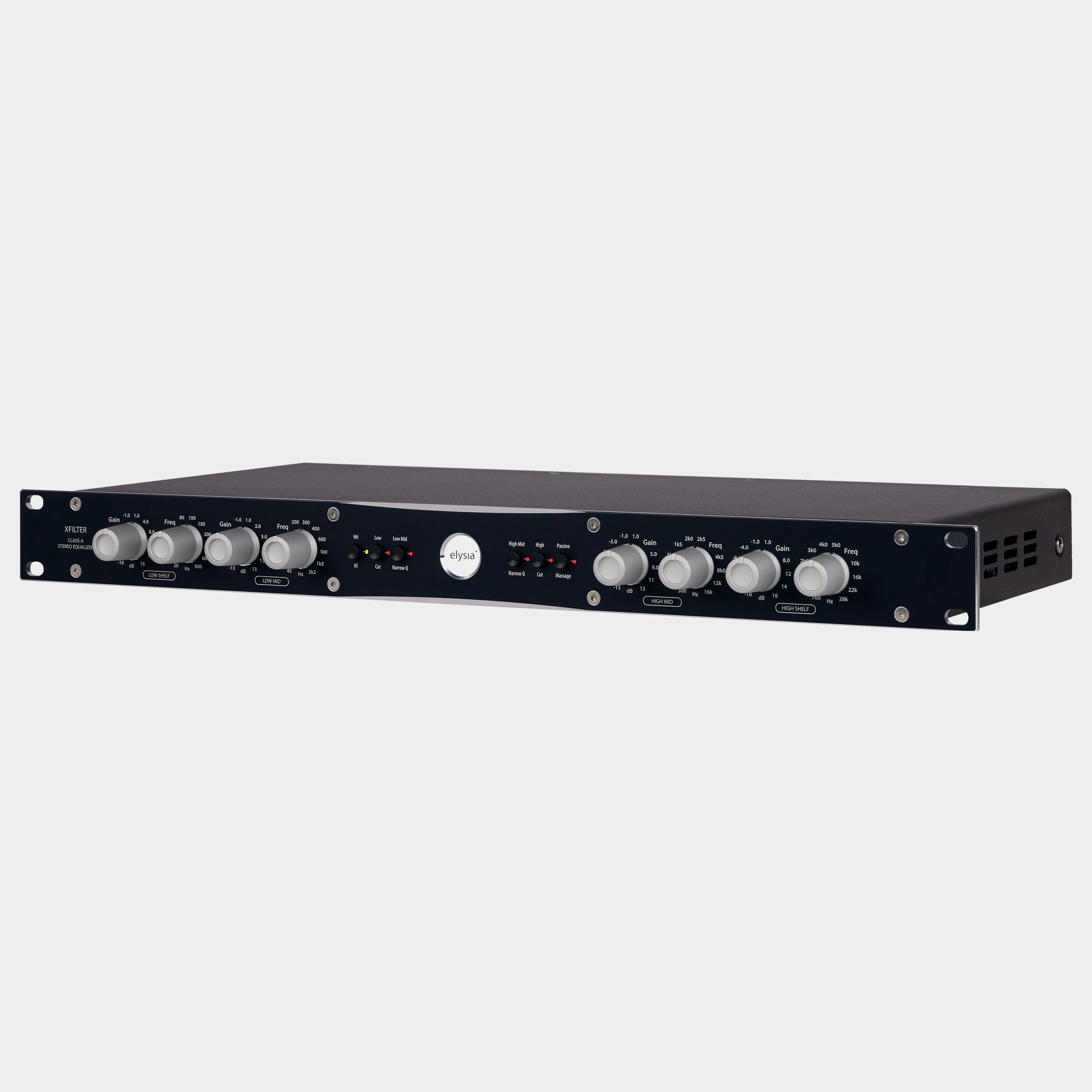
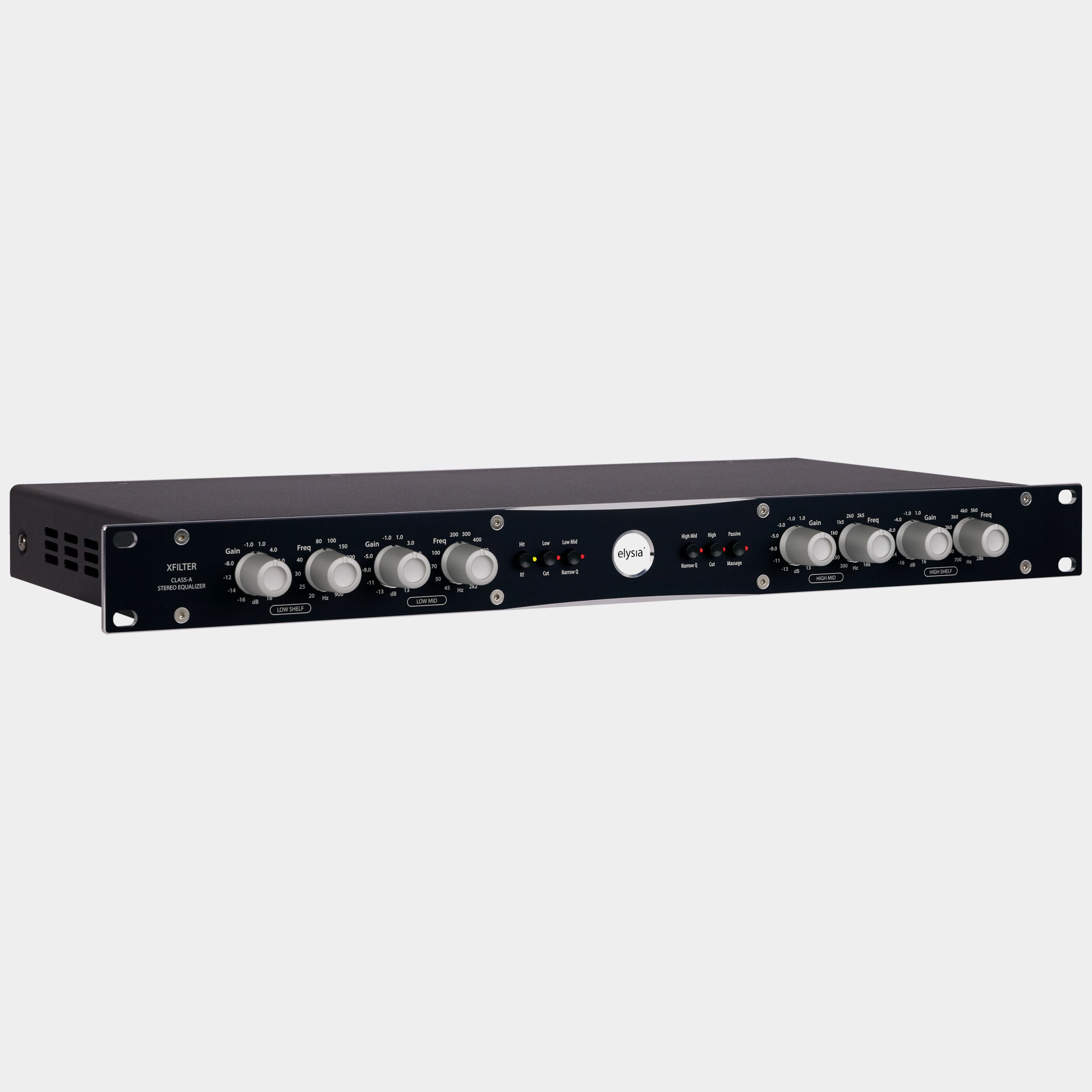
The Elysia Xfilter is a four-band analogue stereo equaliser for shaping the overall balance of mixes, stems and individual sources. Its linked controls apply the same settings to both channels, making it straightforward to adjust weight, presence and brightness while keeping the left/right treatment consistent.
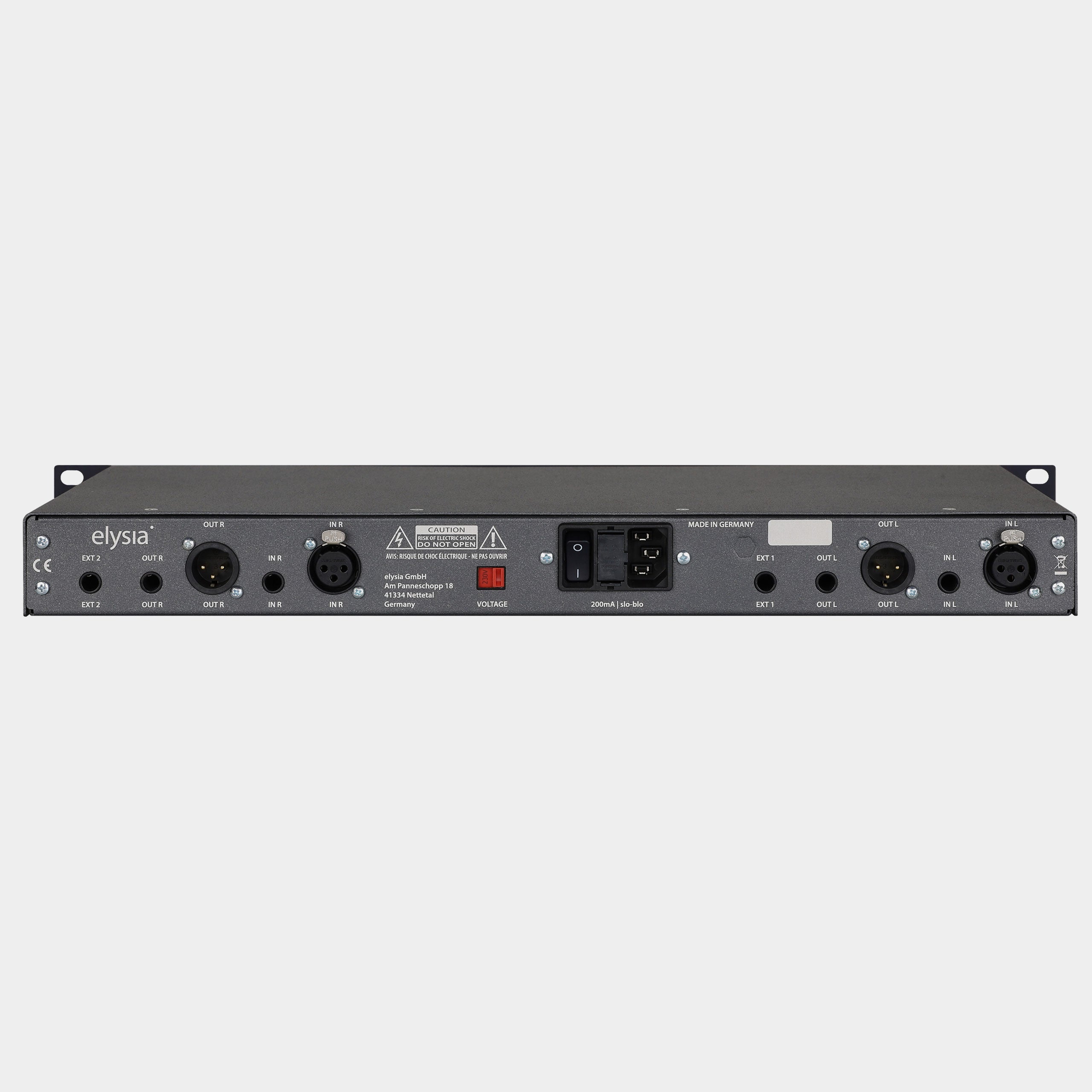
This is the standalone 19-inch rack version, with balanced analogue connections and its own power supply. It integrates directly into a line-level outboard chain or an interface's stereo hardware insert.
Make the broad decisions first
The low and high shelving bands let you change the balance at either end of the spectrum. Add low-frequency weight to a lean instrument group, reduce an overly heavy mix, open up a dull recording or soften a bright arrangement. Because a shelf acts over a broad region, small moves can change the overall impression without drawing attention to a single frequency.
For a mix-bus starting point, listen to the relationship between kick, bass and vocal before reaching for extra top end. A small reduction in low-mid congestion can sometimes reveal detail that initially seemed to need a treble boost.
Mid bands for definition and focus
The two bell bands cover the low-mid and high-mid regions. Each has a switchable Narrow Q setting, allowing a more focused adjustment when the broad curve reaches too much of the surrounding material.
Use the wider response for general tonal balance: reducing boxiness across a drum group, adding body to guitars or helping a vocal stem sit further forward. Try Narrow Q when a particular region is dominating. Adjust in context, then compare with the band returned to zero to check that the improvement remains convincing.
Switch the shelves into resonant filters
The outer bands can become low-cut and high-cut filters, with the gain controls adjusting their resonance. This extends the Xfilter beyond conventional shelving EQ. You can remove unnecessary bass or treble while shaping the response around the cutoff.
On a synth or effects return, this can create a more deliberately contoured sound. On a full mix, a restrained low-cut setting may tidy the very bottom without sacrificing the useful weight above it. Resonance can emphasise the edge of the filtered region, so it is worth checking that kick notes and cymbal detail remain balanced.
Passive Massage: another way to shape the high frequencies
The switchable Passive Massage circuit adds a fixed passive LC filter alongside the four active EQ bands. Its response has a gentle resonant area around 12 kHz and rolls away further up the spectrum, giving you a different contour from simply raising the high shelf.
Try it when you want more apparent openness from overheads, ambience or a finished mix. Compare it with a smaller shelf adjustment rather than assuming both are needed. A busy arrangement can benefit from extra detail, but the right amount depends on the source and the rest of the processing chain.
Linked stereo operation for confident adjustments
A single set of controls governs both audio channels. This is useful when working quickly on a stereo bus: you do not need to duplicate every move across two panels. The Class-A signal path and carefully matched components are intended to preserve detail through those tonal changes.
The hardwire bypass provides a reference to the incoming signal. When a boost makes the processed version louder, compensate elsewhere in the monitoring or insert path before judging it. Similar listening levels make it easier to decide whether the tonal change actually helps.
Use it around the rest of your chain
Placed before compression, an EQ move can change which frequencies drive the compressor. Placed afterwards, it lets you reshape the already controlled signal. Try both when setting up a stereo processing chain: the same EQ settings can feel quite different depending on what follows them.
A permanent stereo EQ in the rack
For a studio with several outboard processors, the rack format keeps the controls accessible alongside your compressor and monitoring equipment. Route both channels through the same path and check your return levels when comparing different EQ treatments.
Product information
Essential details
- Warranty
- 2 Years