


Elysia
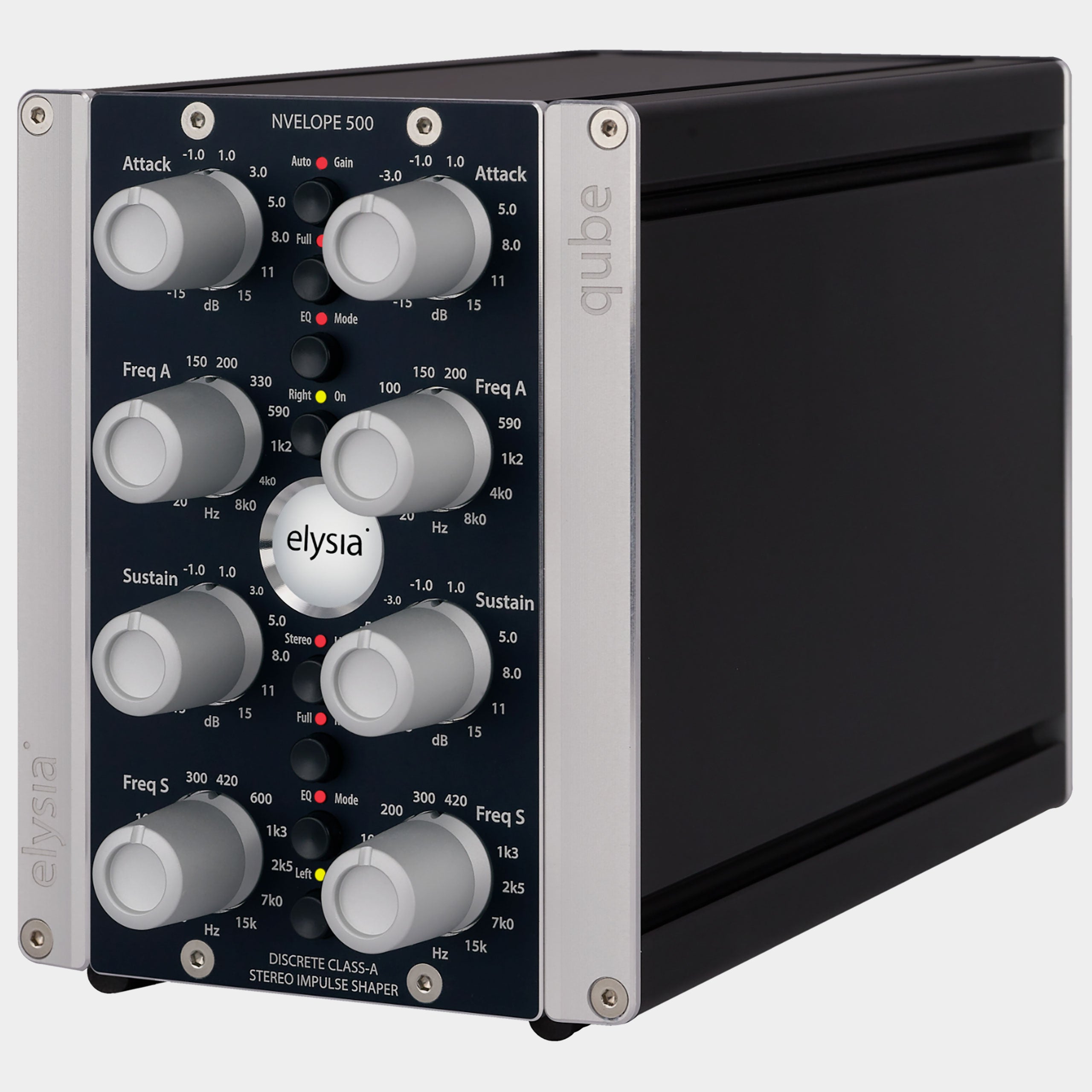
Elysia Nvelope Qube


Omni Capital Finance Calculator
Choose options
Omni Capital Finance Calculator
Omni Capital Finance Calculator
Product overview
Shape attack, sustain and space without a conventional threshold
The Elysia Nvelope Qube is an analogue transient shaper that changes how a sound begins and how it decays. It is useful when the problem is the shape of a note or drum hit: a snare needs more definition, a room recording hangs on too long, or an acoustic part feels too sharp at the front.
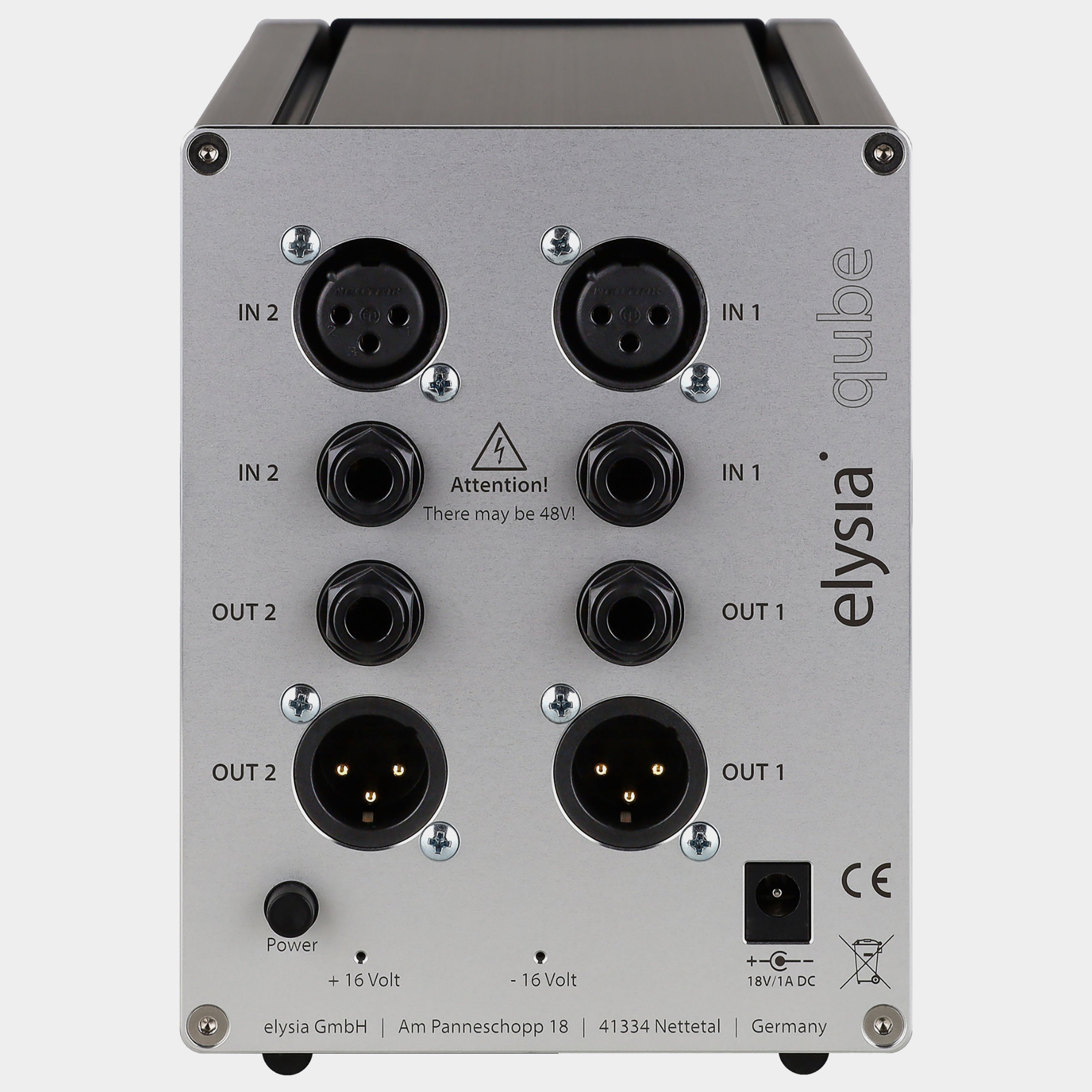
The Qube version puts the two-channel processor into a powered standalone desktop enclosure. Balanced XLR and TRS connections let it work with a line-level studio setup without a separate 500-series chassis.
Separate the initial hit from the body
The Attack control increases or reduces the leading edge of a sound, while Sustain changes the material that follows it. Unlike a conventional compressor, you do not begin by choosing a threshold that individual hits must cross. That makes it a direct way to reshape the envelope of a performance.
Increasing Attack can bring a dull drum forward; reducing it can soften an overly pointed pick or stick sound. Raising Sustain can reveal room and decay, while reducing it can make a part feel tighter. These are changes to the recorded envelope, so the result still depends on what is present in the source.
Full Range mode for quick adjustments
Full Range mode provides the most immediate approach: turn Attack or Sustain in the direction the sound needs to move. The Freq A control adjusts the low-frequency influence on attack detection, giving you a way to reduce how strongly bass energy steers that response.
For a drum loop, start with modest changes and listen to the complete groove. A more obvious snare can be useful, but too much attack may pull the rhythm away from the bass or make hi-hats feel harder. Working in the arrangement helps you find the useful amount.
Dual Band mode for more selective shaping
Dual Band operation lets you choose the frequency regions involved in attack and sustain processing. Freq A sets the lower boundary for attack shaping, while Freq S sets the upper boundary for sustain shaping.
This helps when a broadband adjustment improves one aspect of the sound but disturbs another. You might want more upper-frequency definition without exaggerating the bottom end, or less low-frequency sustain without making the upper detail feel unnaturally dry. The frequency controls let you refine that balance before making stronger envelope changes.
Two channels, several ways to work
The channels can operate independently or be linked for a stereo source. Independent operation also allows different modes on the two channels, so one can work as an envelope shaper while the other handles a separate job.
On a stereo drum or room pair, linked operation is a sensible starting point for coherent adjustments. With independent mono sources, treat each according to its role in the arrangement. You can also patch the channels in series for a mono chain that combines different processing modes.
A shelving EQ when dynamics are not the answer
EQ mode repurposes the controls as a two-band shelving equaliser. Freq A and Attack govern the high shelf; Freq S and Sustain govern the low shelf. This is useful when a source needs a steady change in brightness or weight rather than a change to its attack and decay.
The distinction is worth hearing. A high-shelf boost affects ongoing tonal balance, while an attack boost changes the prominence of the beginning of a sound. Compare those approaches on percussion or acoustic guitar to decide which solves the actual problem.
Manage the peaks you create
Boosting attack can raise peak levels substantially. Auto Gain is available in Full Range mode to help compensate for those increases; it is not part of Dual Band or EQ operation. Keep an eye on the receiving interface or next processor as you work.
For a finished mix, begin with small changes and check both the drums and the sustained material. A transient shaper can alter the sense of distance and energy very quickly, so the strongest setting is rarely the most useful reference.
Portable shaping for sessions and mixing
Keep it within reach when recording drums or acoustic instruments, then use it as an interface insert during mixing. Its compact format is particularly useful when you want hands-on envelope control in a setup that moves between rooms.
Product information
Essential details
- Warranty
- 2 Years